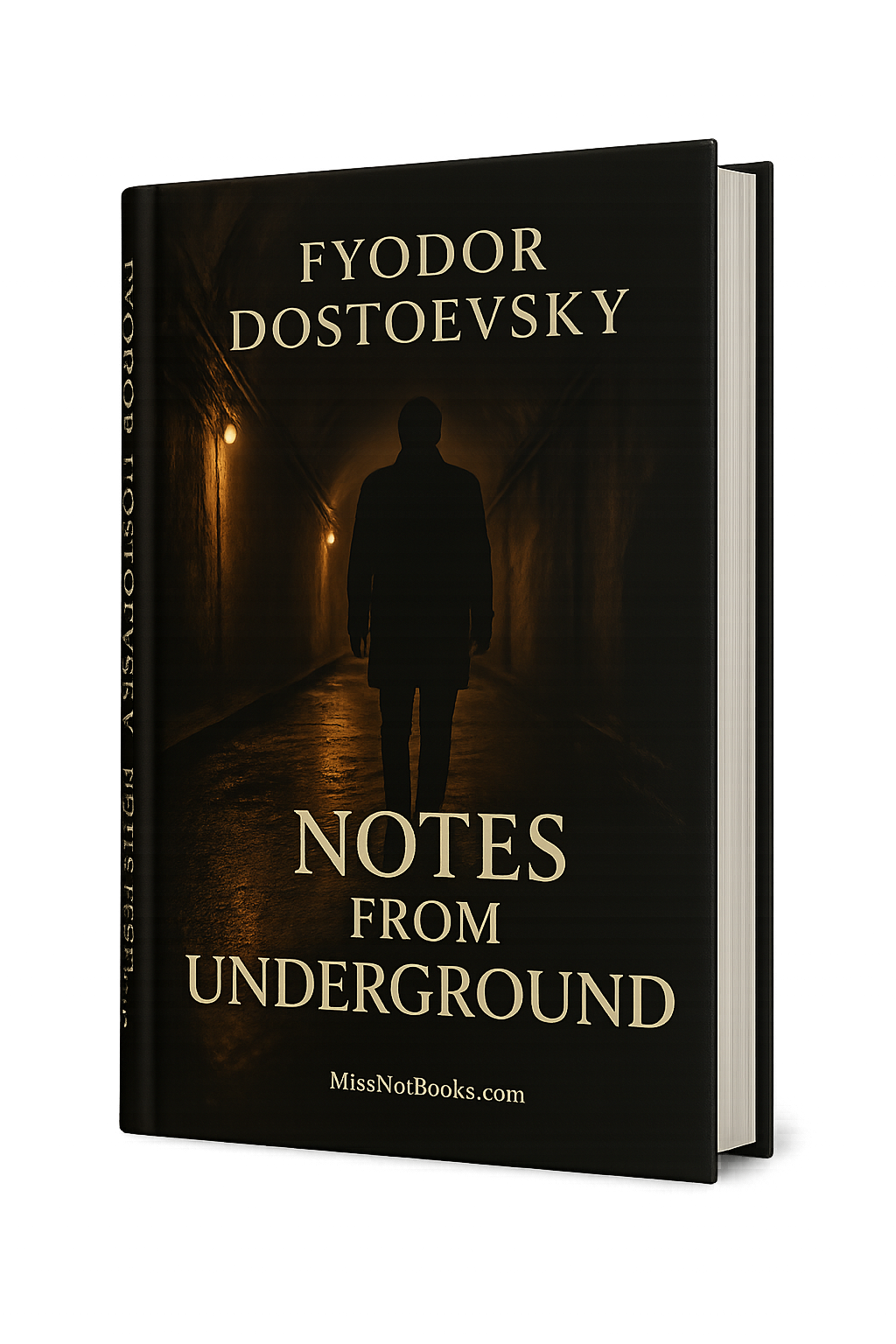
Notes from Underground
In an era marked by profound social upheaval and philosophical inquiry, one literary work surged forth, challenging the very foundations of human motivation and societal structure. The book not only revolutionized the understanding of the human psyche but also served as a formidable critique of rationalism and a profound exploration of existential despair. It laid bare the dark corners of the human condition, prompting humanity to confront the uncomfortable truths about individuality, freedom, and the consequences of isolation in a rapidly modernizing world. The impact of this work resonates throughout modern literature, psychology, and philosophy, making it a critical piece for those seeking to understand the fabric of modern thought. Don’t miss the opportunity to engage with one of the most influential works of all time. Buy it today and explore the intricacies of human psychology and the philosophical challenges of freedom and choice.
Core Ideas and Main Arguments
- The Depth of Human Paradox: The book boldly asserts that humans are not driven solely by reason or social constructs, highlighting the role of irrationality and self-destructive tendencies.
- Existential Isolation: It confronts the struggle of the individual in a conformist society, emphasizing the profound loneliness and alienation that can arise from self-awareness.
- Critique of Rational Egoism: The work challenges the prevailing belief that humans act purely out of self-interest, presenting a counter-narrative of complexity in human motives.
- The Nature of Freedom: It intricately examines what it means to be free, posing difficult questions about the chains of societal obligations versus the liberation of the self.
Author’s Intentions and Context
Emerging from a backdrop of intense philosophical debate during the 19th century, the author sought to delve into the psyche of a fragmented society struggling with emerging modernity. In a time characterized by increasing industrialization and shifting moral landscapes, he aimed to address the growing alienation felt by individuals caught between competing ideologies. This work was a response to the intellectual currents of utilitarianism and Western rationalism, which he believed overlooked the darker, more chaotic aspects of human nature. Through this narrative, he intended to provoke thought about agency, identity, and the human condition, challenging readers to reflect on their own lives and societal roles.
Structure of the Book
The book is structured into several key sections that weave together a cohesive exploration of deep psychological and philosophical themes:
- Introductory Monologue: This opening sets the tone, introducing the narrator’s bitterness and existential reflections.
- Personal Anecdotes: The narrative is interspersed with stories from the narrator’s own life that illustrate his philosophical points.
- Theoretical Digressions: These sections delve into broader critiques of society, modernity, and morality, serving to anchor personal anecdotes in larger philosophical discussions.
- Concluding Reflections: The final segments synthesize the themes and the narrator’s chaotic journey, leaving the reader with lingering questions about freedom and agency.
Key Takeaways
- Human nature is irreducibly complex, filled with contradictions that challenge simplistic interpretations of behavior.
- The individual often grapples with isolation and despair when confronted with existential truths.
- Freedom is multifaceted, and the quest for personal autonomy can lead to unforeseen consequences and deeper existential dilemmas.
- Conformity to societal norms can impose severe constraints on the essential individuality of a person.
Why It’s Important to Read
This work remains a touchstone in the exploration of human nature, engaging readers who are drawn to philosophical inquiry and literary depth. Its insights remain profoundly relevant today as society continues to grapple with issues of individuality, existential angst, and the impact of societal pressures. Scholars, students of philosophy, and anyone seeking to deepen their understanding of the human psyche will benefit immensely from this profound exploration. The enduring questions posed within its pages invite reflection and discussion in an age that often steers toward superficiality.
Impactful Quotes and Analysis
-
“I am a sick man... I am an angry man. I am an unattractive man.”
This powerful opening line encapsulates the narrator's profound self-awareness and bitterness, setting the tone for the exploration of alienation and existential despair. -
“It is better to be an idiot than to be a sage.”
This provocative statement encapsulates the tension between knowledge and happiness, suggesting that ignorance can sometimes shield one from the painful truths of existence. -
“The man is what he believes.”
This thought-provoking assertion invites readers to consider the fundamental impact of belief on identity and actions, challenging them to interrogate their own convictions.
About the Author
Fyodor Dostoevsky (1821–1881) was a renowned Russian novelist, philosopher, and essayist whose works delved into the complexities of morality, faith, and psychology. Emerging from a tumultuous life marked by personal loss, financial difficulty, and political imprisonment, Dostoevsky became a pivotal figure in the literary and philosophical landscape of his time. His exploration of existential themes and deep psychological insight has influenced countless writers and thinkers, earning him a lasting legacy as one of the greatest novelists in world literature.
This monumental work is Notes from Underground by Fyodor Dostoevsky, brought to you for educational purposes by MissNotBooks.com.